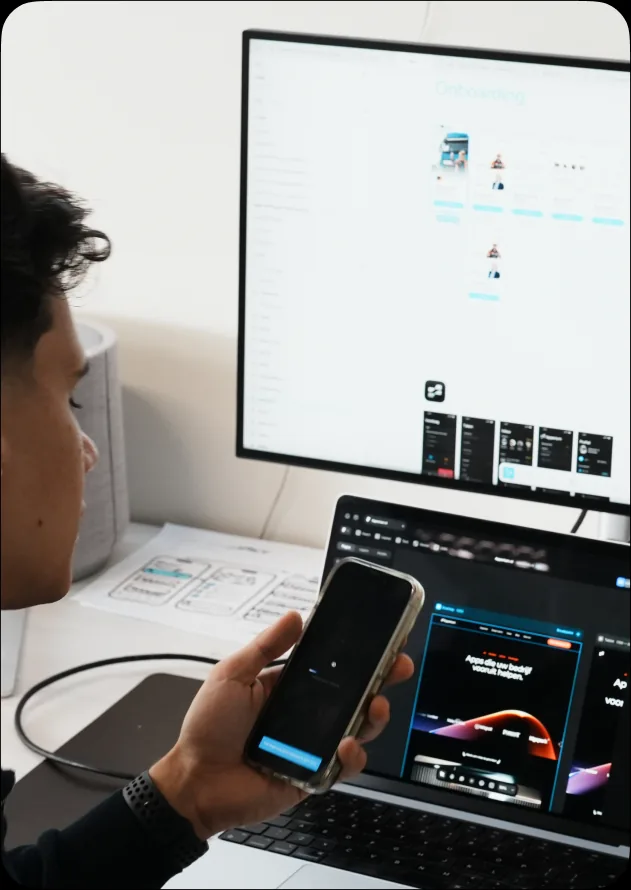
The Apperium team at work

We make Apps.

From the first idea to an app that lasts for years. We are a no-nonsense, mobile-first agency from Den Bosch that helps companies grow with apps people use every day — since 2012.

App development in Den Bosch

We build mobile apps for companies that do their work with them: in manufacturing, trade, installation and beyond. Below are the kinds of apps we most often build in practice. A project almost never fits exactly one box — usually it is a combination of a few of these.

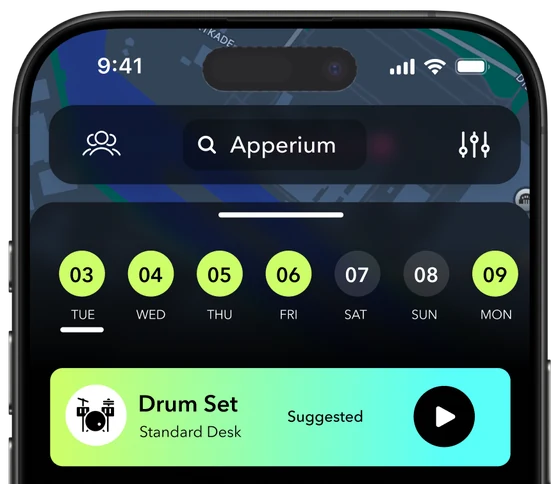
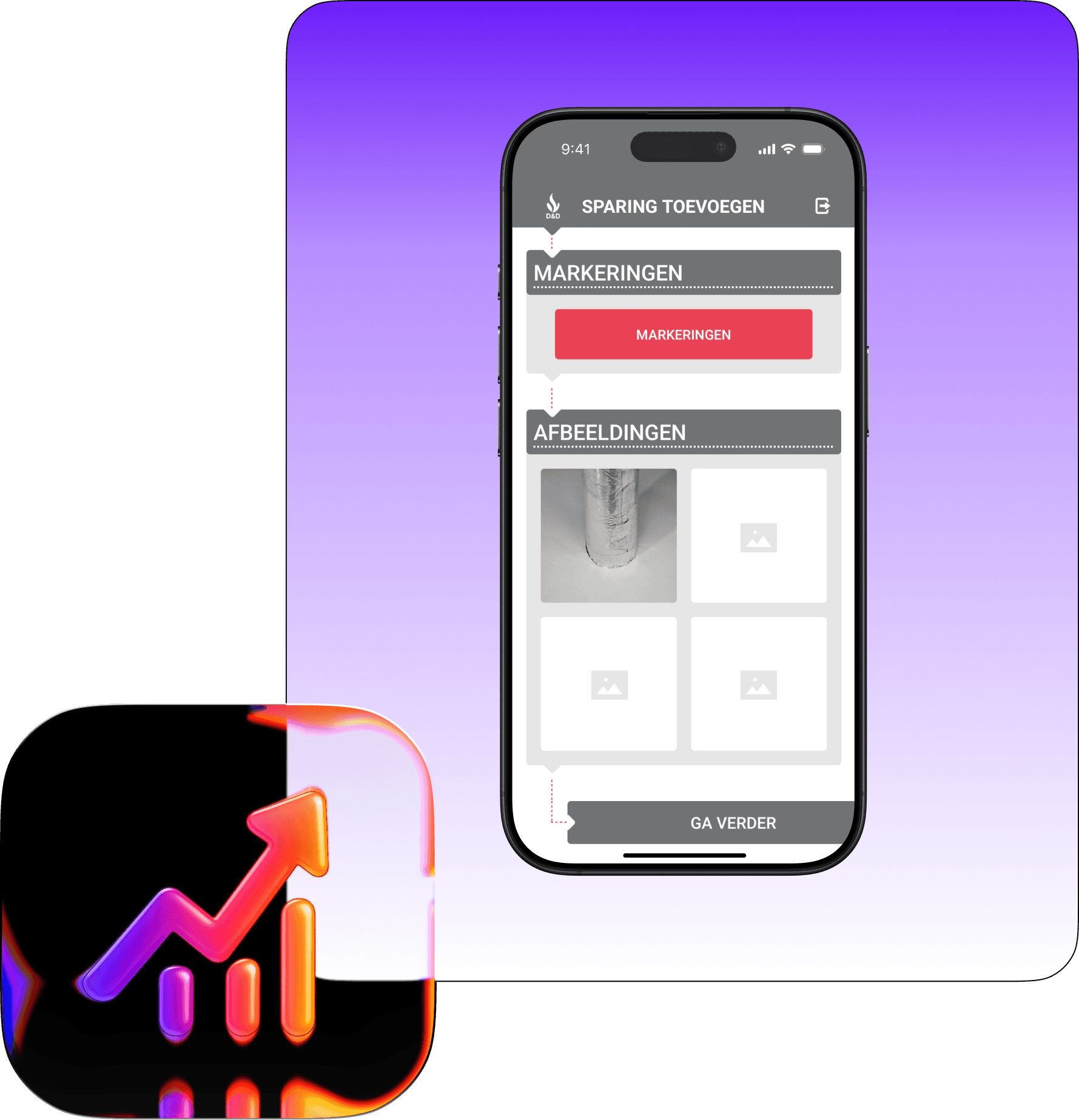
Apps for the shop floor

Look up, log and tick off on site — with gloves on, and with no signal.

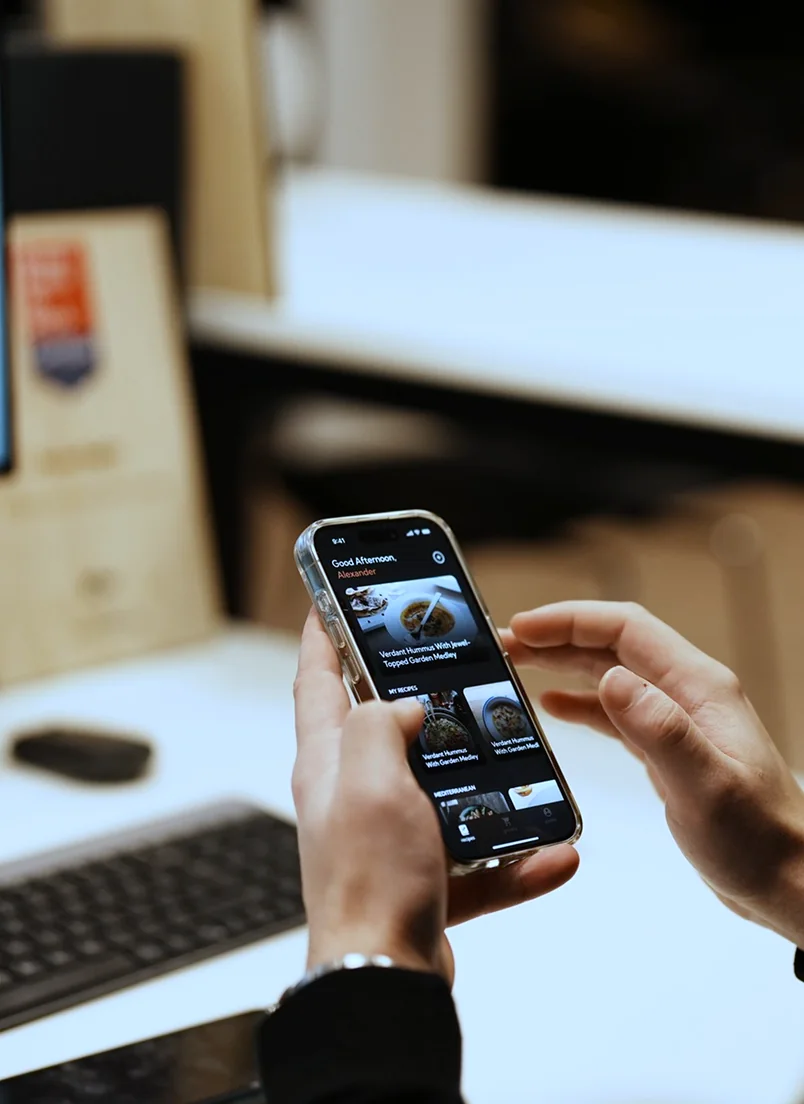
App on iPhone Certilas Smarticate MSD Animal Health

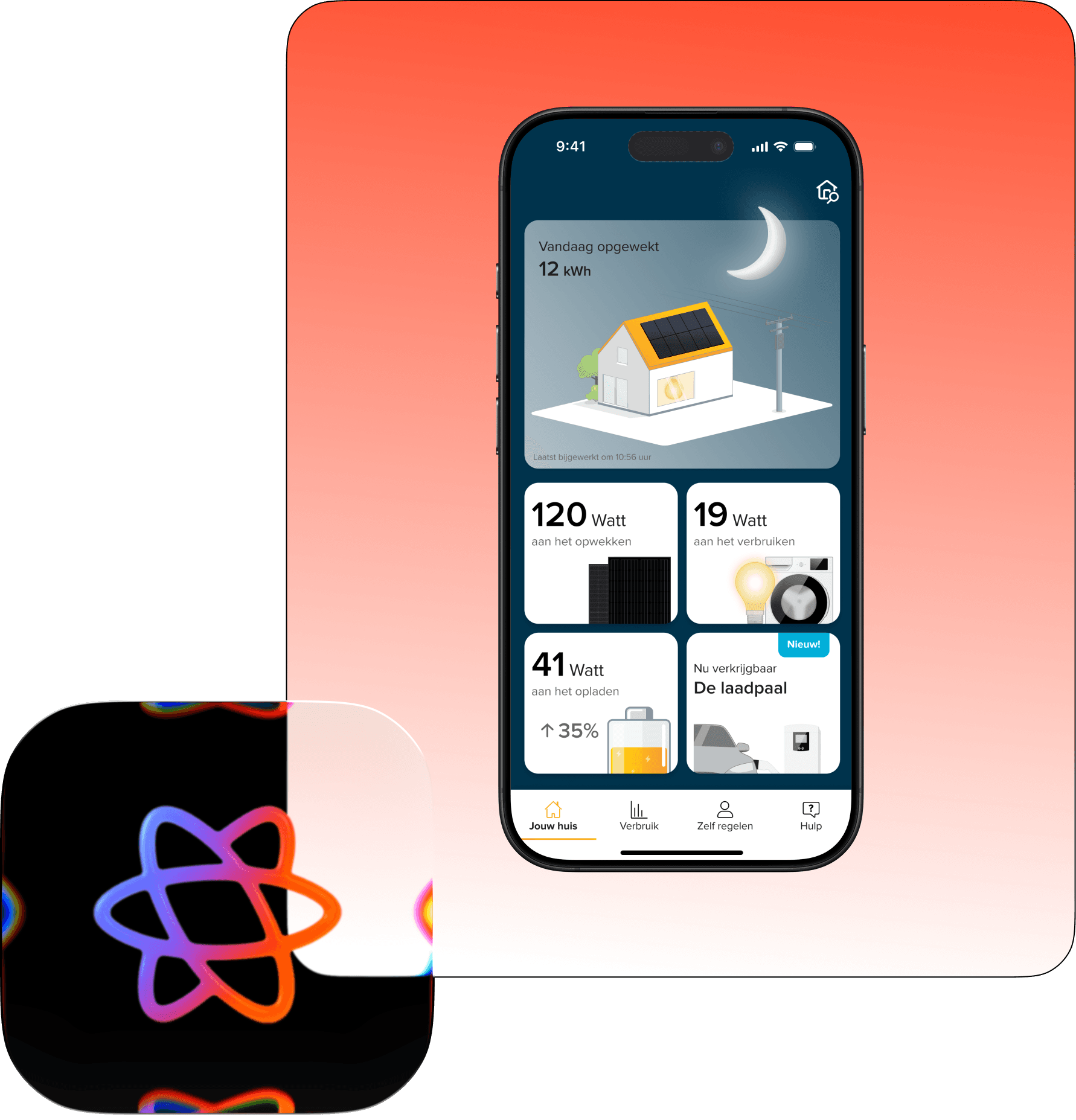
IoT & smart devices

Read, configure and control sensors, meters and installations remotely.

Forest Group IotSpot Harman Kardon

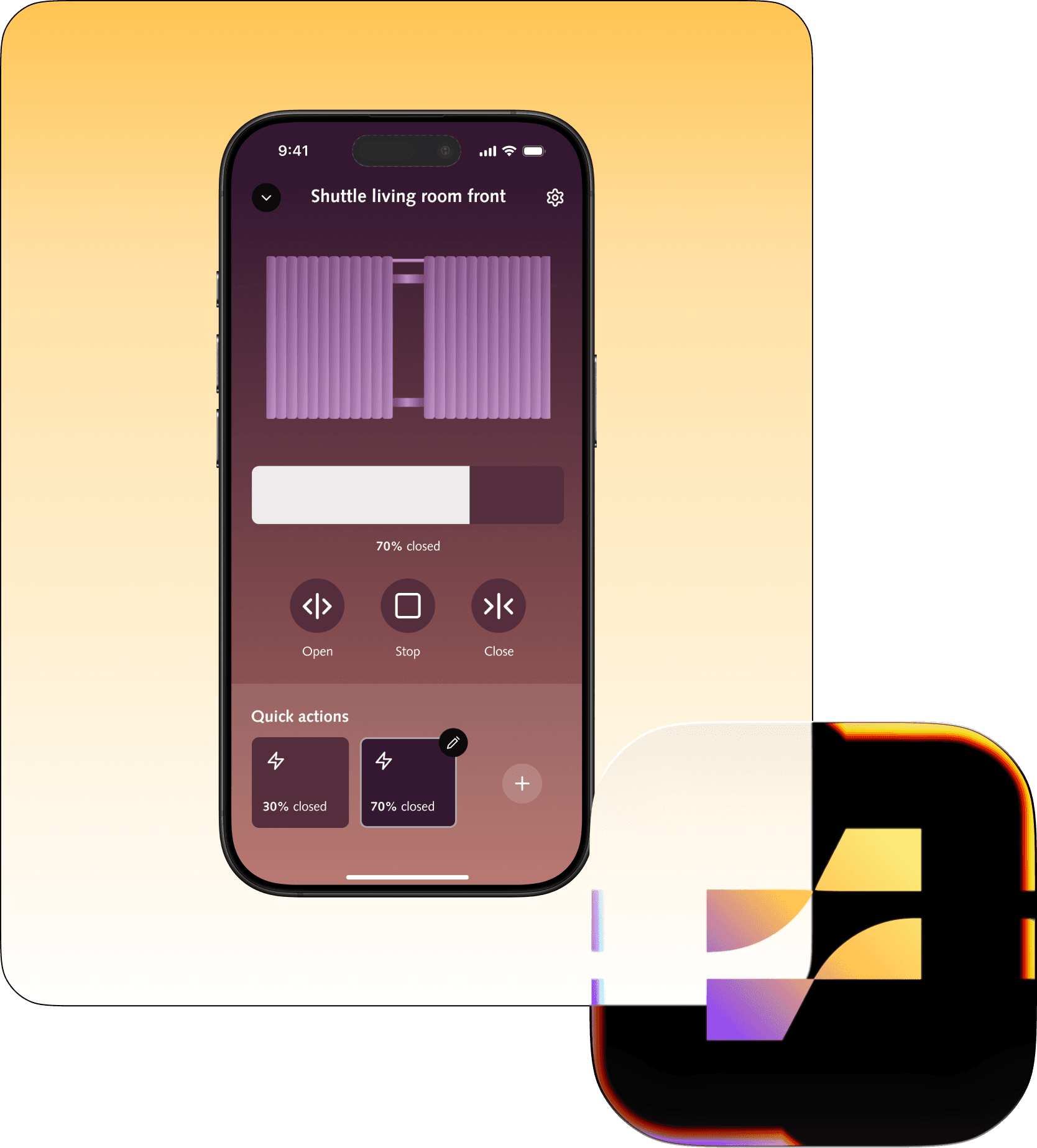
Platforms & portals

Booking, scheduling and administration for hundreds of users at once, with roles and permissions that hold up.

Platform app on iPhone

Backend & integrations

Half the work sits behind the app: permissions, scale and the connection to what you already run.

.NET · ABP · REST · ERP-koppelingen

Consumers & community

Apps with a large audience, where speed and discoverability make the difference.

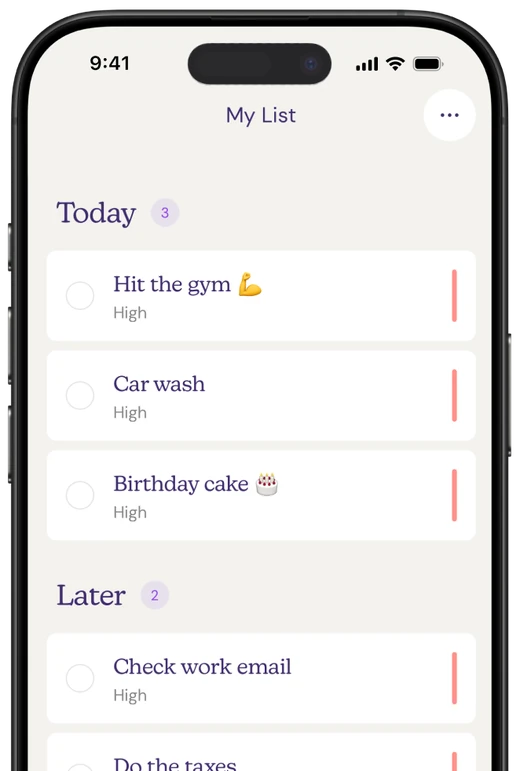
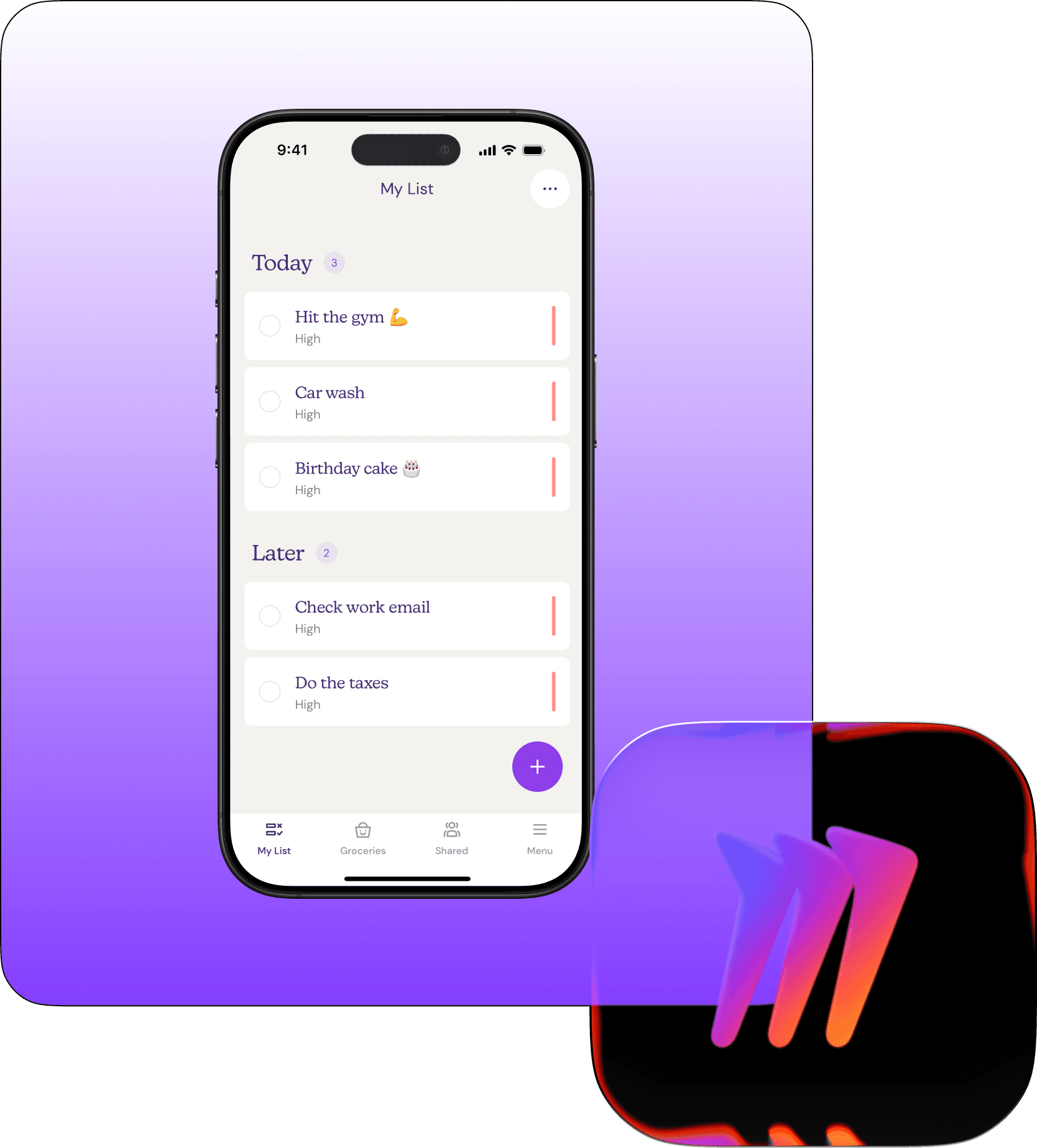
Non-profit app TeamNL List-it

Taking apps further

Redesigning an existing app, making it faster and ready for the years ahead.

GaiaZOO Androidworld Porcilis

Native iOS & Android development

Native development at Apperium

When do we choose native?

When performance is genuinely critical, when the app leans hard on hardware or sensors, or when AR and real-time features play a leading role. Then we are not choosing for speed or efficiency, but for control. For Harman Kardon we built a native app this way, letting visitors experience high-end audio in the store themselves — with the rich animation and fluid interaction that brand calls for.

And if an app only grows into that later?

It happens, and it is not a miscalculation but a logical consequence of scale or complexity. Some apps start cross-platform and move to native later. That is why we allow for it from the very first architectural choice, so that step does not become a rebuild.

How do we decide that up front?

By looking at what the app has to do, not at which technology happens to be popular. Which hardware it touches, how heavy the animation and real-time features get, how many people use it at once. We make that call before a single line of code exists, because reversing a technology choice later is far more expensive.

Isn't native more expensive?

Usually yes: you build and maintain two apps instead of one codebase. That is why it is a deliberate choice for us and not a default. We choose native where the extra control pays for itself in the user's experience; where it does not, we build cross-platform and put that time into the product itself.

View the case

Cross-platform development

Cross-platform development at Apperium

Why React Native most of the time?

One codebase for iOS and Android, so you don't build the same thing twice. Over the past three years it has been the basis for nearly all our new client projects: widely used, actively maintained, and not a hype that disappears in a few years. For most apps, simply the most sensible place to start.

And Flutter, or native after all?

Flutter is a strong technology with a lot of control over the interface, and in specific situations we deliberately choose it. More often React Native wins, because it sits closer to the JavaScript ecosystem and connects more easily to existing systems. We do not start from a framework but from the product: the stage it is at, the performance requirements, the integrations and how quickly it has to go live.

Does a cross-platform app feel less like a real app?

For most apps, no. React Native uses the native interface elements of iOS and Android, so a list scrolls and a button responds the way users expect from their device. Where that is not enough — heavy animation, intensive use of hardware — is exactly the moment to consider native.

Can an existing app switch over?

Yes. Redesigning an existing app, making it faster and getting it ready for the years ahead is part of our work. We start from what is there now and where it pinches — slow screens, outdated integrations, two codebases that have drifted apart — and decide from there what has to be rebuilt and what can stay.

Read our reasoning

AI-assisted development

Arjan with an app concept on his iPhone

What is vibecoding, and do you do it yourselves?

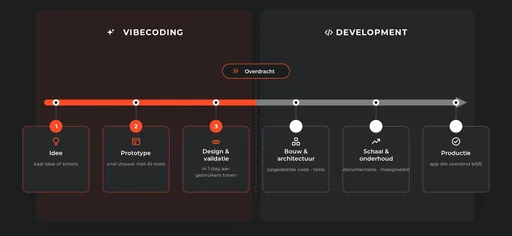
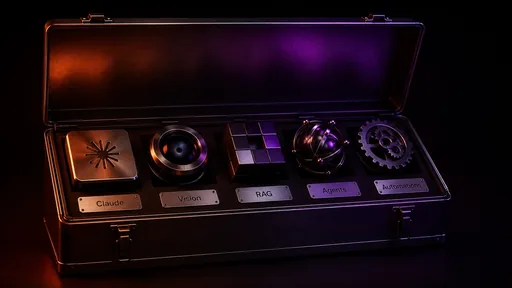
Vibecoding is building software by steering AI tools toward a result instead of programming line by line. Yes, we do it ourselves — mostly in the groundwork: visualising prototypes, writing first versions of code, testing a concept with a few real users inside a day. That saves time in the phase where course corrections are still cheap.

And what do you deliberately not let AI do?

The choices that decide whether an app still stands in three years. How it scales from fifteen to a hundred and fifty users, which integrations are needed, where the technical risks sit. What AI writes passes a developer before it goes to production: broken into manageable pieces, with tests, and with no keys in the code.

Does that get my app live sooner?

Partly. AI speeds up the groundwork: prototypes, first versions of code and testing a concept before development time goes into it. The architectural choices that decide whether your app still stands in three years remain human work, and that phase does not speed up.

We have built something with AI ourselves. Can you build on it?

Yes, and it is a fine starting point: you have something tangible to talk about instead of just an idea. We do look at the layer underneath first. We keep what is usable and straighten out the rest before building on it.

Our view on AI

Got a question?

Apperium (part of the Apperium Group) is a mobile-first development agency focused on high-impact, functional apps for SMEs. It combines creativity, strategy and technology to deliver digital solutions that help businesses grow.

Apperium is based in the Netherlands. We work with both local and international clients and are always available for an intro call, online or in person.

Apperium is Great Place to Work certified. Get in touch to meet the team and see how we work.

Our app price calculator gives you a first indication of the cost in minutes. For an accurate quote we are happy to schedule a no-obligation call to go through your idea and what you need.

We start with an intro call and a concept phase. Then we work the idea out in wireframes and design. After that we build the app step by step, with feedback rounds along the way. Once it is live we also handle maintenance and further development.

That depends on how complex the app is. A simple app can be ready within a few weeks, while larger projects often take several months. In our first conversation we give you a realistic estimate.

We work with modern, dependable technologies such as Swift (iOS), Kotlin (Android) and Flutter for cross-platform apps. Alongside those we use React, Node.js and cloud infrastructure to deliver stable, scalable products.

Our talented team is ready to take on your challenge.

We make Apps.

We make apps.

Finding it hard to turn your ideas into something users get excited about? Apperium designs digital products that are clear, fast and ready for development, built on smart UX and an uncluttered UI.

UI/UX DESIGN, DEVELOPMENT & SERVICES

UI/UX Design

UI/UX Design

01 UX/UI design

02 Design system

03 Usability testing

04 Wireframe & UI prototyping

Development

Development

React Native 01

Low-code / Flutter 02

Native iOS 03

Native Android 04

Services

Services

01 Service level expectation tiers

02 Maintenance

03 Monitoring

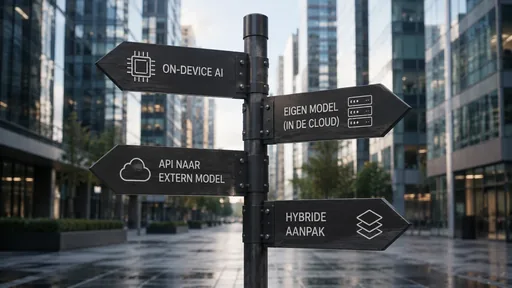
04 In-house LLM

From business to app

From business to app

Many companies still work with manual steps, scattered tools or Excel sheets. We help turn those processes into one clear, well-considered app.

UI/UX DESIGN, DEVELOPMENT & SERVICES